

Despite a treaty of peace and an agreement with the rulers of the independent country of Sindh in 1843, which guaranteed that the British would not attack Sindh, the British, by resorting to deceitful and Dishonest measures and trampling established norms of political and diplomatic ethics, suddenly launched an assault under the command of Charles Napier. British troops occupied Sindh and, citing administrative convenience, subsequently annexed it to British India, even though Sindh was an independent country. In 1947, the British, for their own strategic interests, partitioned the subcontinent by the deceit of religion and created an unnatural state called “Pakistan.” In that process, Sindh fell into the bondage of Punjab, and Sindh came under total oppressive domination, politically repressed and economically exploited not only within Pakistan but also its historical national and territorial identity was extinguished there.The Sindhi nation, which for thousands of years was an independent country, is mentioned in the Vedas as “Sapt Sindhudesh,” and from the Rigveda to Kautilya to Raja Chach and Dahir, the borders of Sindh extended from Makran to Multan and from Katchi to Kach and Rajasthan. That Sindh, the mother of civilizations and languages, the foundation of a great urban civilization whose trade links stretched from East Asia to Egypt, from Iraq and Turkey to Afghanistan and Iran, and to Europe, has been enslaved today through the deceit of religion and the gun of Punjabi colonialism.All of Sindh’s mineral resources, oil, gas, coal, and precious stones, are treated as booty in the name of Punjab and are plundered. Punjab has taken control of Sindh’s sea; taxes on seaports are taken in the name of the federation and looted away. Under the 1945 Rai Commission agreement between Sindh and Punjab regarding river waters, Sindh’s share and right to river water was recognized as 75% from the Indus and 25% from Punjab’s rivers, but after the creation of Pakistan, Punjab, by building illegal canals and dams, has grabbed and usurped that water. While Punjab sold its three rivers to India, instead of Sindh’s share from Punjab’s rivers being reduced after that sale, Punjab sold its rivers and yet took away Sindh’s share of the Indus water.Sindhi language, which even during the British era was the official written and spoken language of Sindh, used in courts, trade, markets, and education across the region, had been widely spoken, understood, and read throughout the area. After the fall of Pakistan, the Sindhi language, which is among the world’s most ancient mother tongues, older than Sanskrit and Prakrit, has had its importance and status destroyed. To turn the Sindhi nation into a minority in its own historic homeland, the state agencies and army have been conducting organized conspiracies to import millions of people from other provinces and countries and settle them in Sindh, to make Sindhis a minority and thus weaken and divide Sindh’s political, national, and territorial unity. To stop the historical evolution of Sindhi society to prevent its transformation from an agrarian to an industrial society, conspiracies have been organized against Karachi’s capitalists; their factories and mills were appropriated and handed over to Punjabi interests under the pretext of nationalization. Through these traitorous landlords, Sindh was not transformed into a modern industrial society but was kept trapped politically in feudal backwardness. As a result, Sindh was deprived not only of its mineral wealth but also of modern urban development.Furthermore, by patronizing the treacherous feudal class, the state intentionally divided Sindh on linguistic and ethnic grounds. Military dictator Zia-ul-Haq made attempts in this direction: he even met Urdu-speaking intellectual Mairaj Muhammad Khan and urged him to form a separate political organization for Urdu-speaking people of Sindh. That deep, large conspiracy against Sindh led to the birth of the MQM, sowing seeds of politics along linguistic lines and damaging Sindh’s political and spiritual national Unity. To further strengthen and make this linguistic-ethnic division permanent, the state used agencies and some pseudo-revolutionaries, such as Qadir Magsi, to stage incidents like the “30 September” events, which caused ethnic clashes inside Sindh. On the other hand, figures like Rasul Bux Palijo acted with narrow vision, sectarian tendencies, and a half-nationalist, half-communist posture, ultimately serving as political instruments of Punjab. Instead of identifying and confronting the historical national contradiction that is, the colonial domination of Punjab over Sindh and the struggle of oppressed nations against Punjabi imperialism Palijo spent his entire life misleading the people by turning this contradiction into an artificial conflict between Sindhi speakers and the Urdu-speaking population of Sindh. As a result, this created the false impression among Urdu speakers that they were not being accepted as part of Sindh. Following this same path, both Magsi and Palijo continued acting as agents of Punjabi interests, diverting the national struggle away from the real contradiction and pushing a misleading, opportunistic political line that separated Sindhi and Urdu-speaking communities.Simultaneously, among the Urdu-speaking population, certain sectarian and chauvinistic elements also adopted an anti-Sindhi attitude, which further obstructed the modern national integration of Sindh. These divisive attitudes although now held only by a small minority are still being cultivated as anti-Sindh sentiments.However, the broader Sindhi nation and the majority of the Urdu-speaking population now understand that such discord is a deliberate scheme of Punjabi hegemonic politics, intended to weaken Sindh’s unified national identity.These events were used to stoke racial politics, and many were exploited as proxies: Urdu-speaking and Sindhi-speaking communities alike were manipulated. The violence that followed, including atrocities committed by people who had been placed inside MQM by agencies, intensified ethnic hatred between Urdu-speakers and Sindhi-speakers, who were in reality parts of the same national fabric but were provoked to fight each other.What became clear to ordinary people then was that this was a conspiracy of Punjab’s colonial project to undermine Sindh’s national unity, and that both Sindhi- and Urdu-speaking people were used as instruments. Because the state and its agencies feared that if Sindhi rural and urban populations united as a modern Sindhi nation and jointly opposed Punjabi hegemonic plunder, then Sindhudesh could become independent in a short time, the army would face collapse in Sindh as it had in East Bengal/Bangladesh. Therefore, the military adopted a policy of divide-and-rule via ethnic-linguistic politics.We also make it clear that the concept of the Sindhi nation and the nationalism of the Sindhudesh National movement (JSMM) is founded upon modern, scientific, and territorial principles not on racial, linguistic, tribal, religious, or sectarian bases. Those people who migrated from India to Sindh in 1947 as a result of historical circumstances have now lived here for multiple generations. Their political and economic interests have become organically tied to the land and history of Sindh.Not only the Urdu-speaking population, but also Pashtun, Punjabi, Balochi, Saraiki, Brahui Lassi, Memoni, Kutchi, Bihari, Bengali and Other communities indeed every ethnic and linguistic group that has lived in Sindh for three to four generations are considered by us to be an integral part of the modern Sindhi nation and society.This is because the Sindhi national identity is based on territorial belonging to Sindh. Everyone who considers Sindh as their own homeland and understands that this artificial Unnatural state of Pakistan is the cause of Sindh’s subjugation and who recognizes the struggle for the national liberation of Sindhudesh as legitimate and necessary, is regarded by us as part of the Sindhi nation, irrespective of race, language, religion, or sect.On one side, traitorous brokers and feudal landlords were politically boosted; on the other, the state sought to bind gullible people to the state through religious fundamentalism. Religious extremists, so-called Mujahideen, were created and during the Afghan war were paid in dollars by the United States to fight the Soviet army. The Punjabi army made billions, and now those same religious militants have turned against the Punjabi Army in other forms. The military that once nurtured these militants for money now calls them “terrorists” and “Fitna al Khawarij” when they no longer serve the generals’ interests, a hypocrisy that the public now recognizes.The public was told that Pakistan was founded in the name of Islam and that Muslims are one nation, the so-called “two-nation theory.” But when Bengali Muslims demanded their language, political economic rights and resisted Urdu imposition, the Punjabi military responded with violent repression: in 1971 the army conducted an extensive campaign in East Bengal (then a province of Pakistan), killing hundreds of thousands “3 million” and committing serious atrocities, including abductions and rape. This raises the question: if Muslims were one nation, why was such mass violence committed against fellow Muslims? Similarly, why was the Afghan war fought with money from the United States? Why were Baluchs and Pashtuns bombed and subjected to atrocities? Why are Sindhi political activists’ bodies found mutilated? Why does the army seize Sindh’s rivers, sea, mineral resources, jobs, and millions of acres of land? The answer, you say, is simple: Punjab, using religious deceit and psychological warfare, has enslaved historic nations, including Sindh.That same conspiracy was faced by the Bengalis, and now the Sindhi nation must understand it and free its historical homeland, Sindhudesh, from forced Punjabi occupation, slavery, and humiliation. Every conscious Sindhi must reflect on what national slavery is and why it must be ended. It becomes the historic duty of conscious, proud nations to liberate themselves from slavery.A simple explanation: slavery is when a dominant imperial power like Punjab occupies the land of a Sindh, seizes sindhs mineral resources, controls our sea, erases sindhi language and history, and ensures that political decisions are made by brokers, landlords, and agencies. The oppressed nation is politically subjugated, made a “minority,” and prevented from achieving national unity. When you observe this pattern, you can see that Punjab is the occupier and Sindh the enslaved. This is straightforward.Therefore, the Sindhi nation must follow the example of the Bengalis: unite and free Sindhudesh from the forced occupation, domination, economic exploitation, and humiliation of Punjabi imperialism. All conscious Sindhi farmers, workers, students, young men and women, city dwellers and villagers, Sindhi- Urdu and All languages-speakers together should join the national movement to liberate Sindhudesh from the yoke of this unnatural state called Pakistan and from Punjabi domination. They must take the historic risk to save the homeland for future generations and become part of the national struggle so that all chains of slavery are broken and the Sindhi nation brings an end once and for all to this last era of humiliation.Remember, No matter which language we speak, we are Sindhis.
The struggle and sacrifices we make for the liberation of Sindhudesh will honor us in history, just as the names of Shaheed Raja Dahir, Darya Khan, Hoshu Sheedi, Hemu Kalani, Rupalo Kolhi, Pir Pagaro, Muzaffar Bhutto, Sarai Qurban Khahoor, Prof. Hassan Zafar Arif, and other national heroes shine with dignity and pride.
Our sacrifices will secure for us the status of a free and honorable nation in the eyes of the world.This is a pivotal moment for Sindh’s national existence, identity, and unity. The state and its fascist army, together with Punjabi political elites and treacherous brokers, have decided to transform Pakistan into a “Greater Punjab” to legally, politically, economically, and socially make the country into a greater Punjab, which will further divide and neutralize the national unity and aspirations of historic nations like Sindh and Others. This conspiratorial process is ongoing, and to prevent any national liberation movements, the state has deployed landlords, religious extremists, racists, opportunistic parliamentarians, pro-state so-called left-wingers and turncoat politicians to co-opt, distract, and silence genuine national movements. The constitution has been used as a pretext to legitimize the subjugation of nations, and the parliament becomes the stage where those who sell their conscience serve the state’s agenda.Every conscious Sindhi must understand this: whether by imposing One Unit, by creating fundamentalist militants, by distorting history, by erasing languages, or by denying the existence of entire nations, an even more dangerous plan is now being carried out. Through 27 clauses/measures, the architects of this design are preparing a program to annihilate the existence of historic nations in the form of a “Greater Punjab,” They are converting the unnatural, artificial state of Pakistan into a Greater Punjab, effectively transforming it into a Punjabi imperial empire.Therefore, the clear and uncompromising national and historical position of Sindhi nation and our Sindhudesh National Movement is this: we do not accept this artificial state called Pakistan. We must liberate our historic homeland, Sindhudesh. The only guarantee for the survival and continuity of historic nations lies in the freedom of Sindhudesh and the liberation of all historic nations.Against that: it is the historic duty of the conscious, honorable Sindhi people peasants, workers, students, youth, men and women, urban and rural Sindhis, Sindhi- Urdu and All languages-speakers alike to unite and wage a fearless political struggle and determined national resistance against the forced occupation and domination by Punjabi imperialism, to liberate Sindhudesh and restore the nation’s dignity and rightful control over its homeland and resources.The Punjabi imperial ruling elite and the military establishment of Pakistan are actively conspiring to divide the historic territorial unity and national cohesion of Sindh. Such actions threaten to ignite widespread violence in the region. We call upon the international community and the United Nations to take urgent notice and immediate action. The Sindhi nation is suffering not only from colonial occupation within Pakistan, but also from deliberate attempts to dissolve its national identity and unity.We, the people of Sindh inheritors of one of the world’s most ancient and distinguished civilizations, the Indus Valley Civilization present our historical, political, and national case before the nations of the world. This document is an appeal to the collective conscience of the international community: to all civilized nations, global institutions, and regional powers. Through this historic declaration, we speak to all peoples, intellectuals, human-rights organizations, and the United Nations who believe in the principles of national self-determination, historical justice, and human dignity. As a nation, we are exercising our inherent and natural right to self-determination in the struggle for the freedom of Sindhudesh. Our purpose is to inform the world about the systematic enslavement, political repression, economic exploitation, and Punjabi colonial occupation imposed upon the Sindhi nation within the artificial state of Pakistan since 1947. Sindh has continuously endured political, economic, and cultural subjugation under Punjabi rule.The state structure of Pakistan particularly its military is globally known for corruption, repression, and patronage of religious extremism and terrorism. This military establishment has acted as a mercenary Mafia in the region. The world must raise its voice against the brutality of this fascist military order and seriously recognize the natural right of Sindhudesh to freedom and sovereignty before the region once again witnesses mass bloodshed similar to that of Bengal.The Sindhi nation will not retreat from its struggle for national liberation. The artificial state of Pakistan and its so-called “two-nation theory,” which has already proven to be historically false and unsustainable, has now reached its inevitable end. Its unnatural structure must dissolve for this is not merely a political necessity, but a historical imperative. For centuries Sindh and other regional nations of the subcontinent have maintained distinct histories, geographies, languages, and political identities. Yet since 1947 these identities have been repeatedly undermined by external conquest, centralizing state projects, and policies that serve a narrow ruling elite. A sequence of historical events and state strategies demonstrates that Pakistan is not an organic national formation but an artificial, coercive construct that has been repeatedly reshaped to secure Punjabi political, economic, and military hegemony. First, the British conquest and the annexation of Sindh (1843) inaugurated a pattern of foreign and centralized control over Sindh’s politics and economy. That colonial takeover marked the beginning of external rule that subordinated regional institutions and resources to outside interests. Second, the post-colonial One Unit scheme of the 1950s which fused the western provinces into a single administrative entity centralized power in the hands of the center and further weakened provincial autonomy, eroding the ability of smaller nations to preserve their distinct identities and self-government.Third, language policies and the imposition of a single national language have been repeatedly used as instruments of assimilation and political control. Centralized language politics provoked catastrophic conflict in East Bengal and later became a source of recurring tensions within Sindh. Fourth, the 1971 crisis in East Pakistan (now Bangladesh), with the violent suppression of regional demands and mass atrocities, provides the most stark historical example of how concentrated military power can crush regional national rights, a reminder of the lethal consequences of an unreformed, centralising order. (the political lesson, however, is clear.) Fifth, successive military regimes have relied on Islamisation, patronage networks, and co-optation of elites to secure their rule; these policies entrenched clienteles politics and redirected resources toward favoured groups and regions. Sixth, the rise of ethnically organised parties and urban conflicts often manipulated by state agencies further fragmented regional unity and diverted popular struggles into intra-communal contests that served the interests of the enter. Seventh, Control over natural resources in Sindh, carried out in the name of the federal system, in reality reflects Punjabi domination. The allocation of Sindh’s resources on the basis of population, the politics of water distribution, and the enforcement of Punjab’s unilateral decisions regarding the Indus River all demonstrate a coercive system of control. Punjab maintains forced authority over rivers and regulates them according to its own interests, while the revenues of Sindh’s ports are claimed under the banner of federal administration, yet in practice these benefit Punjab’s ruling elite.
This clearly establishes that Sindh has been reduced to a colonial dependency under Punjabi rule. It is more than sufficient evidence to show that Punjab is engaged in the historical national, political, and economic exploitation of Sindh.
Taken together, these historical episodes and policies form a coherent pattern: the structures and practices of the Pakistani state have repeatedly functioned to preserve a political, economic, and military dominance centered in Punjab. This is not merely coincidence or bureaucratic failure; it is a replicable strategy of domination: centralisation, co-optation of local elites, linguistic and cultural assimilation, economic expropriation, and the threat or use of military force. In effect, the state has operated as an instrument of occupation, a system that keeps other nations politically subordinated and economically exploited.Given this historical record, the conclusion is unavoidable: the current Pakistani state, shaped by successive acts of coercion and centralisation, can be seen as an artificial and imposed political structure that sustains Punjabi hegemonic control over other nations. For the peoples and nations subjected to this order, the path forward is not deeper accommodation within a system that repeatedly infringes their rights; rather, it is emancipation from political subjugation and economic exploitation. From all these demonstrated realities, it becomes evident that the survival and security of the historic nations imprisoned within this state lie in exercising their natural and inherent right to self-determination in order to reclaim their national freedom and liberate themselves from colonial domination within Pakistan. Only when these nations take their future into their own hands, as other free nations of the world have done, will they be able to live with justice, freedom, equality, and dignity and only then can lasting peace be restored in the region.
We therefore appeal to the peoples of the world, to international institutions, and to human rights organisations to recognise and support the principle of national liberation, as enshrined in the Charter of the United Nations, and to seriously consider its application to the nations seeking freedom from Pakistani colonial control.
The objective is clear and unequivocal: just as the Bengali nation freed itself, the other historic nations within this artificial state must also be liberated from Punjabi colonial domination, coercion, and economic exploitation. Pakistan, which was created under the so-called “Two-Nation Theory,” did not emerge organically from the will of the people. Rather, it was engineered to serve the strategic interests of the British Empire. The very intellectual architect of this theory was Lord Curzon, a British imperial strategist not a leader from among the peoples of this region.
the territorial boundaries of this state were drawn not by its claimed founders, but by Durand and Radcliffetwo British officials. If the ideological basis of the state and the demarcation of its borders were both designed by the British, then the narrative that Pakistan was created as a sovereign expression of Muslim will is historically deceptive and fundamentally false.
It is therefore necessary to confront and reject this historical fabrication, and to acknowledge that the state was founded as an unnatural geopolitical construct, sustained through Punjabi military domination and centralized political control. Today, the Punjabi establishment continues to impose colonial authority, external occupation, and systematic repression upon the historic nations of this region.
The liberation of these nations from Punjabi imperial domination has now become both a historical necessity and a moral imperative. Their right to freedom from imposed rule, coercive state structures, and military oppression aligns with the universal principles of justice and national self-determination recognized in international law and the United Nations Charter.
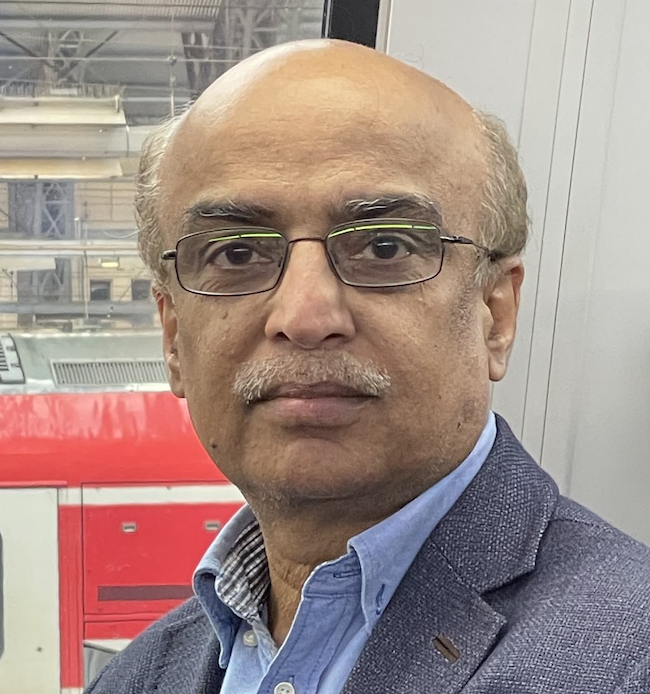
Shafi Muhammad Burfat
Chairman
Jeay Sindh Muttahida Mahaz, JSMM
(Sindhudesh National Movement)
Darmstadt, GERMANY